


One AWS Mistake Doubled Your Cloud Bill Overnight — Can You Spot It?
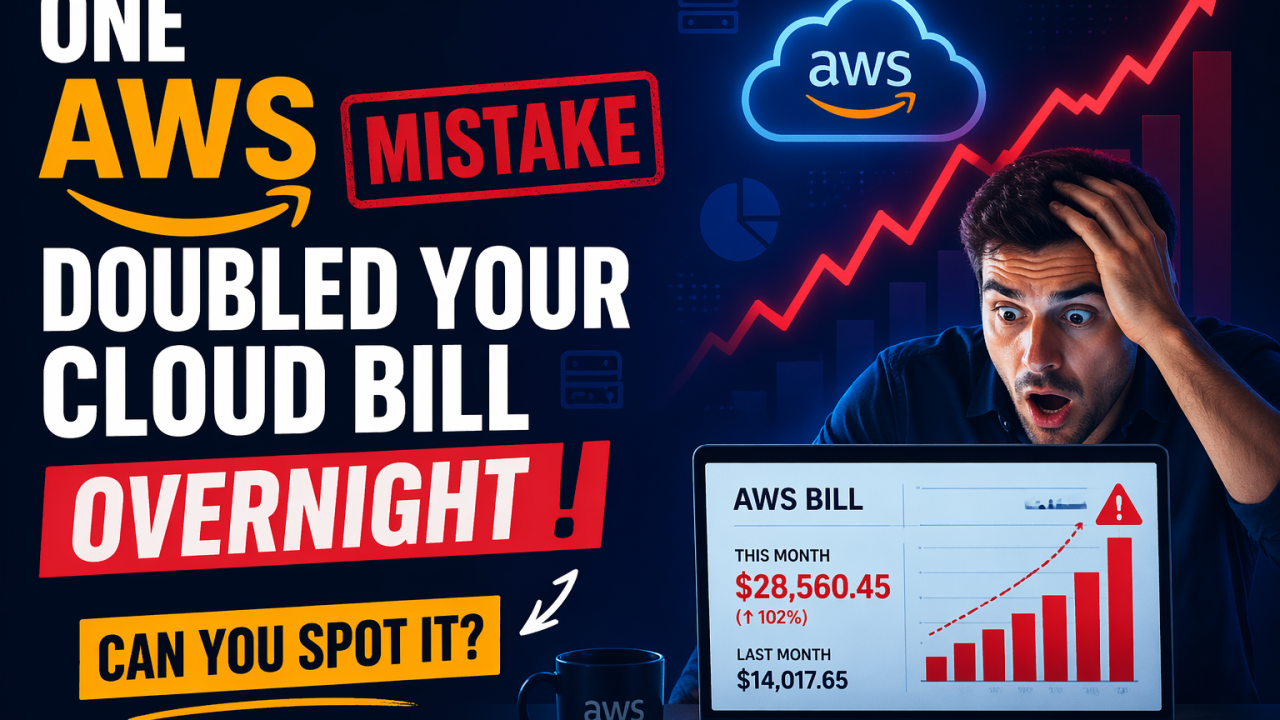
Cloud computing gives businesses the flexibility to scale fast, innovate quickly, and only pay for what they use. But without proper monitoring, one small mistake can lead to a surprisingly large AWS bill.
Many companies are shocked when they receive their monthly invoice and notice that cloud costs have suddenly doubled overnight. The good news? In most cases, the reason is simple—and fixable.
The Common Mistake: Unused Resources Still Running
AWS services are billed based on usage. If resources are left active when they are no longer needed, charges continue to accumulate.
Some of the most common hidden cost creators include:
1. Idle EC2 Instances
Virtual servers running 24/7 without being actively used can generate unnecessary compute charges.
2. Unattached EBS Volumes
Even after instances are deleted, storage volumes may remain attached to your account and continue billing.
3. Old Snapshots and Backups
Snapshots are useful for recovery, but outdated backups stored for months can increase storage costs significantly.
4. NAT Gateway Charges
Many businesses overlook NAT Gateway pricing. Heavy outbound traffic can create unexpectedly high monthly charges.
5. Oversized RDS Databases
Databases provisioned larger than required often waste resources and increase bills.
How to Identify the Problem Quickly
When costs spike unexpectedly, start with these AWS tools:
AWS Cost Explorer
Analyze spending trends and identify which service caused the increase.
AWS Budgets
Set spending thresholds and receive alerts before costs become serious.
AWS Trusted Advisor
Get recommendations on idle resources and cost-saving opportunities.
How to Prevent This from Happening Again
To keep your AWS bill under control:
- Regularly review running resources
- Delete unused storage and snapshots
- Right size EC2 and RDS instances
- Schedule automatic shutdown for development servers after business hours
- Monitor traffic-heavy services like NAT Gateway and Cloud Front
- Use tagging for better cost visibility across teams
Real Savings Are Possible
Many organizations reduce AWS costs by 20% to 40% simply by improving visibility and eliminating waste.
Cloud cost optimization is no longer optional—it’s part of running an efficient modern business.
Need Help Managing AWS Costs?
At Cloud Techon, we help businesses optimize AWS environments, improve performance, and reduce unnecessary cloud spending.
If your AWS bill feels higher than expected, it may be time for a cloud cost review.
Book Your Free Consultation: https://cloudtechon.com/contact/